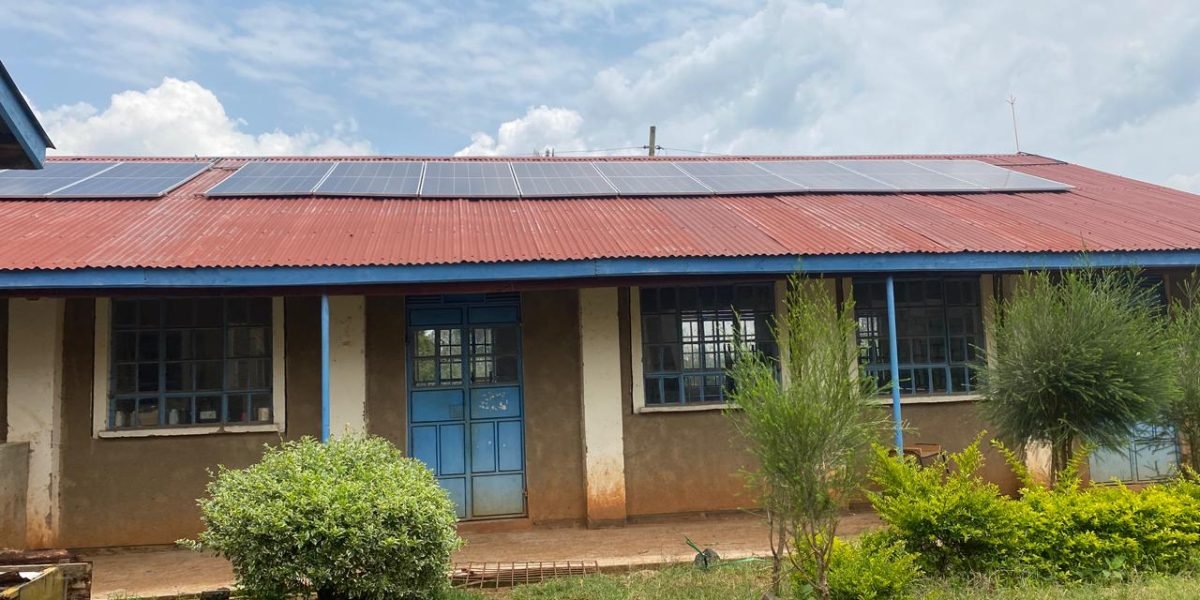
A dependable power supply is essential for Kenya’s growing economy. It supports education, business operations, healthcare delivery, and family life. Yet many households, schools, and enterprises still experience challenges that affect their productivity and comfort. As Solar Spark engineers, we work closely with customers who face unpredictable electricity supply, high energy costs, and unreliable backup systems, issues that arise naturally in any developing and rapidly expanding energy infrastructure.
This article explains these challenges from an engineering perspective and highlights how Solar Spark designs technical solutions that deliver stability, efficiency, and long-term value.
1. Navigating Power Interruptions and the Need for Stability.
Customers across different regions often experience occasional power interruptions or fluctuations. These conditions are not unusual for a national electricity network serving a large and growing population, especially as demand increases and infrastructure evolves. While the grid continues to expand and improve, many institutions and homes require additional layers of reliability to maintain seamless operations.
Solar Spark provides uninterrupted power supply by having solar systems designed by combining solar panels, hybrid inverters, and battery storage. We analyze load profiles, peak usage times, and hours of required autonomy to design systems that ensure continuity. Whether it’s a school conducting evening studies or a business running essential equipment, our engineering approach helps customers maintain power consistency at all times.
2. Managing Rising Electricity Costs Through Smart Solar Engineering.
Electricity pricing can vary due to fuel adjustments, economic trends, and broader energy market factors. For many Kenyan households and businesses, these fluctuations influence monthly energy budgets. Customers increasingly seek ways to stabilize long-term costs and reduce dependence on variable grid tariffs.
Solar Spark addresses this need by engineering systems that maximize daytime solar power production and reduce grid reliance. Using high-efficiency bi- facial panels, MPPT technology, and intelligent load-matching, we design installations that offset the most expensive energy costs. Over time, customers benefit from predictable energy expenses and a more sustainable financial model. For institutions such as schools and clinics, these savings support better resource allocation and improved service delivery.
3. Reducing Generator Dependence for Cleaner, Quieter Operations.
Many customers rely on diesel generators as backup power systems, especially where uninterrupted energy is critical. While generators are effective, they come with high fuel costs, maintenance needs, and noise considerations. As fuel prices fluctuate, operating a generator becomes even more expensive.
Our systems provide clean, quiet, and highly efficient power storage. Modern lithium iron phosphate batteries, advanced hybrid inverters, and smart battery management systems ensure reliable backup without noise or fuel consumption. This transition significantly reduces operational overhead while maintaining the reliability needed for continuous power.
4. Correcting Underperforming Solar Installations.
A notable concern among customers is that many previously installed solar systems do not deliver expected performance. These issues often arise from incorrect sizing, poorly matched components, suboptimal installation angles, or inadequate after-sales support.
Solar Spark engineers conduct detailed system audits to identify performance gaps. Through inverter diagnostics, battery health checks, cable assessments, panel tilt evaluations, and load testing, we determine the root cause of inefficiency. We then upgrade, reconfigure, or repair installations using best-practice engineering standards and high-quality components. This ensures that customers experience the true benefits of solar power, reliability, efficiency, and long service life.
5.Strengthening Confidence through Technical Support and Ongoing Maintenance.
Solar systems are long-term assets, and their performance depends on regular monitoring and professional maintenance. Many customers express concerns about limited support or lack of follow-up from previous installers, which affects system reliability over time.
Solar Spark prioritizes strong after-sales relationships. Our installations include remote monitoring features where applicable, and we provide scheduled maintenance to ensure that panels, inverters, and batteries operate at optimal performance. Customers benefit from quick response times, expert troubleshooting, and transparent reporting, ensuring their systems work efficiently throughout their lifespan.
6. Social and Economic Impact of Reliable Solar Energy in Kenya.
Reliable solar energy has far-reaching benefits beyond engineering performance. Schools experience uninterrupted learning, extended study hours, and fully functional digital laboratories. Businesses operate with greater stability, reduced overhead, and improved productivity. Healthcare facilities maintain reliable lighting, refrigeration, and essential medical equipment.
Economically, solar energy enables organizations to redirect savings toward development, staff, equipment, and community initiatives. Environmentally, reduced generator use lowers emissions and supports Kenya’s transition toward cleaner energy. Solar Spark’s work also contributes to job creation in engineering, technical installation, logistics, and maintenance.
7. Engineering Energy Systems That Work for Real People.
At Solar Spark, engineering is more than technical design, it is a commitment to creating power solutions that improve everyday life. By understanding the challenges Kenyan households, schools, and businesses face, we build systems that deliver reliability, cost savings, and operational independence.
Our mission is not to replace the national grid, but to support customers with complementary and sustainable energy systems that enhance stability and efficiency. With every installation, we move closer to a future where reliable, affordable, and clean energy is accessible to all.